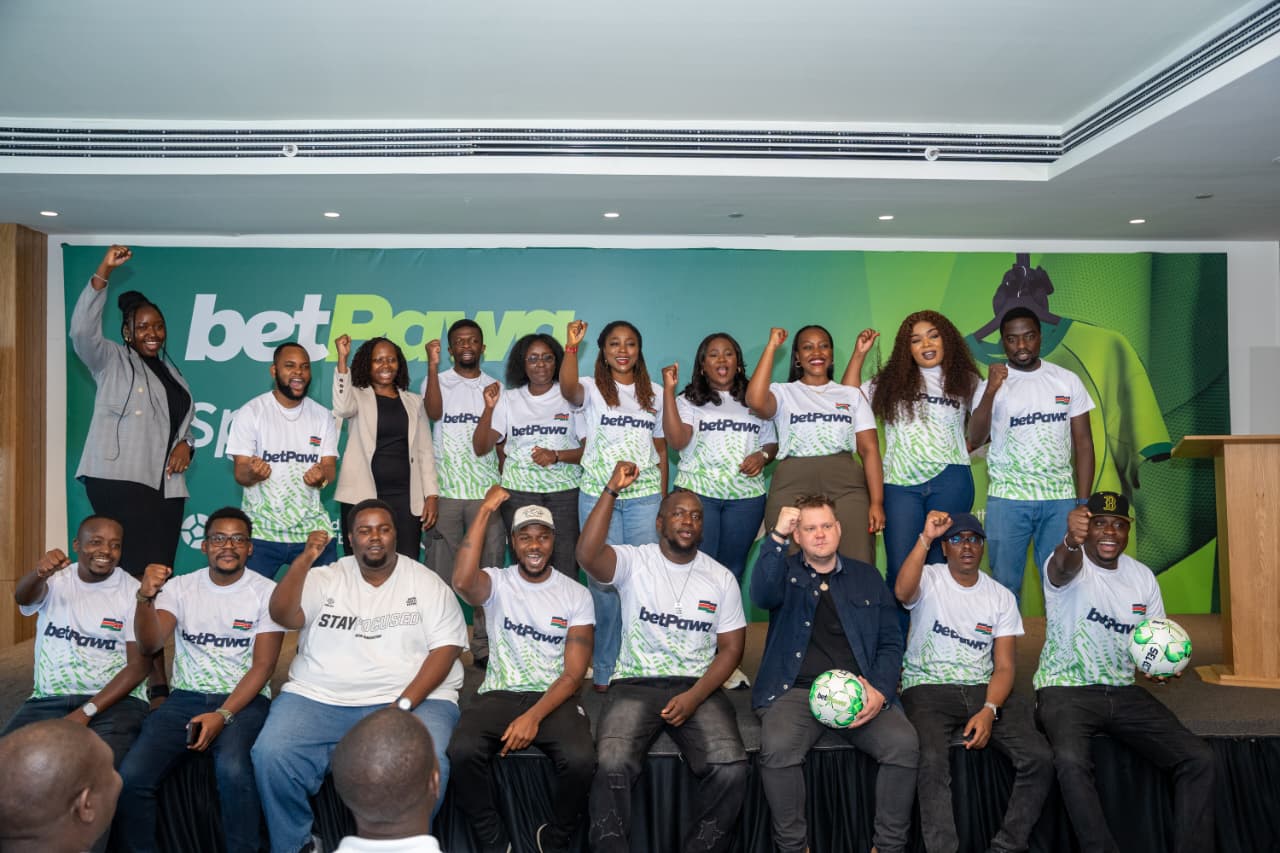
Across Kenya’s community football pitches from informal grounds in Nairobi’s settlements to regional league venues in the counties access to basic playing equipment remains one of the biggest barriers to structured competition and player development. Earlier, teams attended a sports development drive where 25 grassroots teams received a significant boost through a KSh 6.7 million initiative that delivered full playing kits and training gear to 575 players.
The support, funded by gaming site betPawa, targeted both men’s and women’s teams competing in regional and lower-division leagues. Each player received a complete kit consisting of jerseys, shorts and socks, while every team was allocated four match balls. In total, 100 balls were distributed alongside 575 training bibs and 75 pairs of goalkeeper gloves.
For many of the beneficiaries, the impact goes beyond aesthetics. At grassroots level, teams often operate on minimal budgets, relying on community contributions to purchase kits or share limited equipment during training sessions. In some regions, players rotate jerseys across fixtures or train without bibs, making structured sessions difficult to run.
“Because talent is everywhere in Kenya. You see it in community fields, in local leagues, in the quiet determination of players who show up every week, often with very little, but with everything to give,” said Borah Ndanyungu, Head of Local Marketing and CSR at betPawa Kenya, underscoring the rationale behind the initiative.
Jacob Kithinji, who represented four Division Two Conference League sides from Tharaka Nithi County Livewire FC, Banga FC, UNESCO FC and Black Stallion FC described the donation as timely for teams that face persistent financial strain at the grassroots level.
“I can assure you that at the grassroots level there are very many challenges, ranging from financial to jerseys to uniforms,” Kithinji said. “These kits are going to boost our teams’ morale. When teams are empowered, especially by a national sponsor, they are motivated and they perform better.”
At Kibagare Girls FC, which competes in the FKF Nairobi West Women’s Regional League under the Football Kenya Federation structures, team manager Itotia Karanja said the donation arrived just in time for league action.
“We are very happy for the donation of the kits. We start using them this Sunday in a league match,” Karanja said. “The girls will be excited, and these kits will motivate them to keep fighting and keep playing.”
Women’s teams form a visible share of the beneficiaries, including Masimba Queens, Falcon Queens, Arrows of Kajembe Starlets, Gategi Ladies and Kibagare Girls FC. Their inclusion reflects a deliberate attempt to address the equipment gap that disproportionately affects women’s football structures, where sponsorship and commercial partnerships are less common compared to the men’s game.
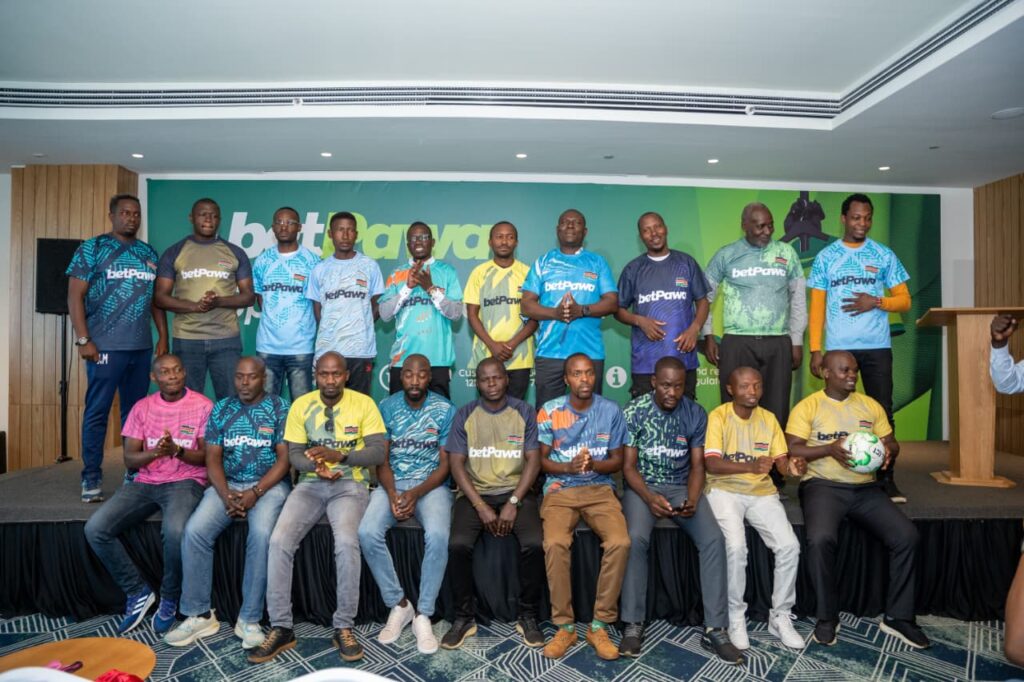
“Involving women makes sure that we promote gender equality and empowerment, because women are mostly left behind,” Ndanyungu added. “We want to make sure that when we are supporting sports development, it is inclusive.”
Grassroots football in Kenya feeds directly into the national development pipeline. Regional leagues under FKF form the base of the promotion system that ultimately links to the National Super League and the FKF Premier League. However, while administrative frameworks exist, material support at the lower tiers often lags behind.
The absence of proper match balls, bibs and goalkeeper gloves affects training intensity, injury prevention and tactical organisation. Coaches frequently adapt drills due to limited resources, while players sometimes compete in non-uniform kits that undermine team identity and professionalism. By addressing these practical constraints, the initiative aims to stabilise the foundation on which competitive structures are built.
For the 575 players now stepping onto community pitches in coordinated kits, the change is immediate and visible. As Kithinji put it, “Today’s exercise has been successful. We are humbled, and we are going to do better.”
At grassroots level, development is rarely about grand announcements. It is about ensuring that when players show up to train, the basics are finally in place.