Across East Africa, a troubling tide of authoritarianism is steadily rising, with Uganda and Tanzania offering stark reminders of how fragile democracy can be. In Uganda, President Museveni’s decades-long grip on power thrives on constitutional manipulation, electoral coercion, and the silencing of dissent.
Elections are routinely tainted by ballot stuffing, voter intimidation, and partisan institutions, while opposition figures such as Kizza Besigye and Robert Kyagulanyi (Bobi Wine) endure arrests, harassment, and violence. Politics has been militarized, with civilians tried in military courts and repressive laws like the Public Order Management Act and the Computer Misuse Act weaponized to stifle free expression.
In Tanzania, President Suluhu Hassan’s government has similarly embraced heavy-handed tactics; jailing opposition leaders like Tundu Lissu and John Heche, intimidating critics, and tightening media controls, signalling a sharp democratic backslide and a growing culture of fear in the region.
In sharp contrast to the tightening authoritarian grip in Uganda and Tanzania, Kenya has long stood out as a beacon of democratic resilience in East Africa. While its neighbours slid deeper into repression, Kenya, with its own fair share of challenges, charted a different course, one defined by citizen defiance and a determined quest for political pluralism.
As Uganda grappled with coups and counter-coups after its independence, Kenyans in the 1980s were already waging a bold struggle for multiparty democracy that redefined political participation. Notably, Kenya held its first multiparty elections in 1992, three years before Tanzania, cementing its role as a “big brother” in the region’s democratic consolidation. The historic defeat of KANU in 2002 marked a decisive break from one-party dominance, even as Tanzania and Uganda remained under Chama Cha Mapinduzi and National Resistance Movement rule.
The 2010 Constitution, hailed as one of Africa’s most progressive, entrenched fundamental freedoms, human rights, and checks on executive power. Kenya’s democratic journey, anchored in constitutionalism and civic activism, thus stands as a crucial counterweight to the authoritarian drift spreading across East Africa.
Yet even as Kenya has long projected itself as a democratic torchbearer in a troubled region, recent events reveal troubling signs of creeping authoritarian solidarity that threaten to erode this legacy. Authoritarian solidarity refers to the mutual reinforcement and protection among repressive regimes through shared practices of intimidation, censorship, and state violence and in East Africa, this trend is increasingly visible.
The illegal repatriation of Ugandan opposition leader Kizza Besigye from Kenya to Uganda, where he remains in custody, exemplifies cross-border complicity. Similarly, Kenyan and Ugandan human rights defenders Boniface Mwangi and Agatha Atuhaire were abducted and tortured while expressing solidarity with Tanzanian opposition leader Tundu Lissu. Even prominent Kenyan figures such as Martha Karua have been denied entry into Tanzania for supporting democratic activism.
More recently, the abduction of Bobi Ngaji and Nicholas Oyoo, linked to Bobi Wine’s campaign, underscores this coordinated repression. The silence of all three governments signals a dangerous regional trend, one that weakens accountability, emboldens impunity, and undermines the very democratic solidarity Kenya once championed.
Scholars in political science argue that authoritarian autocracy poses a serious danger to Kenya due to the concept of regime diffusion. They observe that political systems often cluster regionally; democracies near democracies and autocracies near autocracies, because governance ideas, strategies, and incentives easily transcend national borders. This dynamic is increasingly visible in East Africa, where leaders appear to borrow and reinforce one another’s repressive tactics.
Kenya, therefore, must be wary of this growing wave of authoritarian solidarity that threatens to blur its democratic distinctiveness. History illustrates how cross-border political contagion has long shaped governance in the region: the 1982 coup attempt in Kenya mirrored Uganda’s cycle of coups; Dr Kizza Besigye’s 2001 presidential challenge drew inspiration from Kenya’s reformist leaders Kibaki, Wamalwa, and Raila; while Bobi Wine’s 2021 youth-driven campaign echoed Kenya’s rising youthful politics led by Babu Owino.
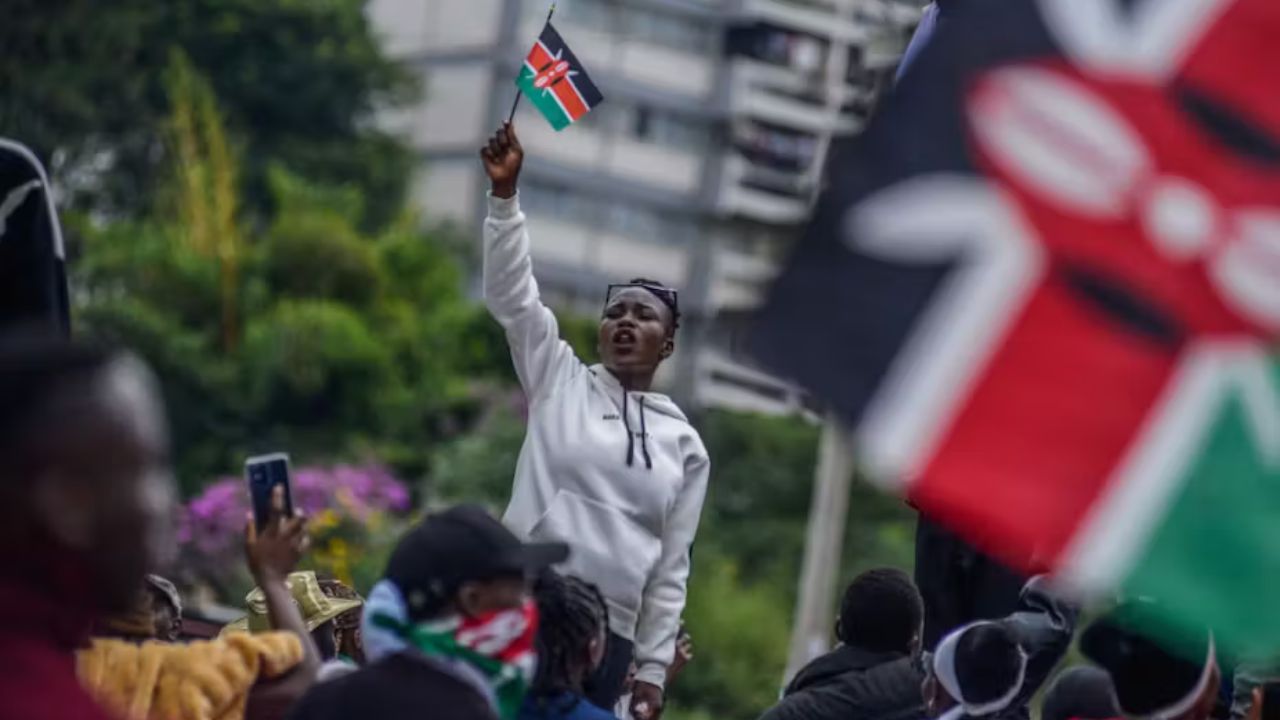
Today, Tanzania’s protests mirror the Kenyan 2024 Gen Z protests, which symbolise democratic renewal and civic courage. To remain East Africa’s moral and political compass, Kenya must champion regional democratisation and not be part of repression through authoritarian solidarity
This growing regional culture of repression is now casting its shadow over Kenya itself, as signs of creeping authoritarianism emerge ahead of the upcoming elections. Once celebrated for its vibrant civil society and independent media, Kenya is increasingly mirroring the very patterns it once stood against. The government has tightened media and digital controls, curbing free expression and critical journalism.
Cybercrime and anti-terrorism laws, initially meant for national security, are now weaponised to surveil, arrest, and silence dissenting voices online. Police brutality has become a familiar tool for suppressing protests, with demonstrators and opposition supporters routinely detained and charged under anti-terror statutes. Peaceful assemblies are frequently dispersed under the guise of maintaining public order.
These repressive tactics point to a steadily shrinking civic space and raise a sobering question: Is Kenya, the region’s long-standing model of democratic progress, now drifting toward the same authoritarian path as its neighbours?
Faced with these troubling signs of democratic regression, Kenya must now make a deliberate choice to resist the authoritarian tide or risk being swept into it. To safeguard its hard-won democratic legacy and regional credibility, the country must decisively push back against the creeping patterns of repression taking root. Kenya’s enduring strength has always rested on judicial independence, civil liberties, and competitive elections, pillars that have long set it apart from its more repressive neighbours.
Undermining these foundations through intimidation, censorship, or manipulation of justice would unravel decades of democratic progress. Aligning politically or ideologically with authoritarian regimes in Uganda and Tanzania would not only normalise repression but also erode Kenya’s moral authority as a defender of freedom and human rights.
Kenya’s institutions must therefore remain vigilant against executive overreach, protect civic space, and ensure accountability. Preserving democracy is not merely a national duty, it is a regional responsibility that reaffirms Kenya’s role as East Africa’s stabilising counterweight to authoritarian solidarity and a beacon of democratic hope on the continent.
Alfred Makotsi is a PhD Candidate (Diplomacy and International Relations),
Mandela Washington Fellow (2025)
IGAD Leadership Academy Fellow (2025)
PLGP Fellow (2017)