It is exactly one week after the burial of Rt. Hon. Raila Odinga and the Orange Democratic Movement (ODM) now find themselves trapped in a fog of confusion and contradiction. What was once a disciplined movement held together by Raila’s personal authority and political mystique now appears leaderless and ideologically adrift. Senior party figures have issued conflicting statements about ODM’s future; some endorsing continued cooperation with President William Ruto’s “broad-based government,” others warning against what they describe as a slow-motion absorption into the ruling coalition.
While each leader may be right in interpreting the last standing instructions Raila left behind, they must remember that Raila was an experienced politician who held his cards close to his chest, and only a few could truly decipher his political moves; hence the title The Enigma. To understand his final significant political move, the handshake that gave birth to the broad-based government, one must analyze his history.
From his ‘cooperation’ with Moi that ended in betrayal when Moi endorsed a younger Uhuru Kenyatta, to the broken MoU with Kibaki after the 2002 elections, through the turbulent coalition government where he was consistently undermined, and finally, the 2018 Handshake with Uhuru that arguably cost him the 2022 election, Raila’s political journey has been a chain of betrayals.
This time, however, he reinvented himself, adopting “strategic ambiguity”, an art he had perfected into calculated ambiguity. It was this very strategy that allowed him to remain relevant, unpredictable, and indispensable in Kenya’s ever-shifting political landscape, an art ODM must now learn to master or risk perishing in the hands of President Ruto.
In political science, strategic ambiguity refers to the deliberate use of vagueness, mixed signals, or partial commitment by a political actor to retain flexibility, manage competing interests, and maximise political leverage across multiple constituencies. It involves maintaining intentional uncertainty; allowing a leader or party to appeal to diverse groups with differing expectations while avoiding firm commitments that could alienate any side.
By remaining non-committal, a political actor preserves room to manoeuvre, negotiate, and adapt to shifting political realities. This approach enables the actor to extract concessions, maintain influence across rival factions, and sustain relevance in volatile or competitive political environments. For instance, Nelson Mandela employed strategic ambiguity during South Africa’s transition, reassuring white elites of stability while promising black South Africans transformative change.
Similarly, Zimbabwe’s Robert Mugabe alternated between nationalist rhetoric and pragmatic accommodation with Western interests in the early years of his rule, securing both domestic legitimacy and foreign aid.
In Nigeria, political leaders have often used regional balancing and shifting alliances to maintain multi-ethnic coalitions without fully committing to any bloc. In each case, strategic ambiguity served as a tool to manage competing pressures, sustain bargaining power, and navigate complex political terrains.
In the months before his death, Raila Odinga’s actions following the MoU with President William Ruto showed his continued mastery of strategic ambiguity. His deliberate delay in formalising any deal with Ruto reflected a careful vagueness; a cautious hesitation designed to keep both his allies and opponents guessing while maximising gain from either side. By neither rushing into an agreement nor outright rejecting engagement, Raila maintained the flexibility to assess public opinion and the balance of political forces before making any firm commitment.
Even the coining of the term “experts” to describe the four ODM leaders who joined Ruto’s government was strategic, serving to downplay their political defection and frame it as a matter of technical cooperation rather than ideological surrender. This ambiguity was further visible in Raila’s alternating tone: at times, he appeared to endorse cooperation with Ruto’s “broad-based government.”
At the same time, at other moments, he distanced himself through silence or veiled criticism. The result was a carefully managed dual message, one that appeased reformists seeking national unity while simultaneously reassuring his loyal base that ODM remained independent and ideologically intact.
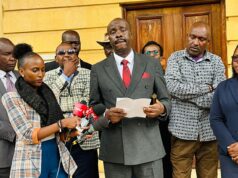
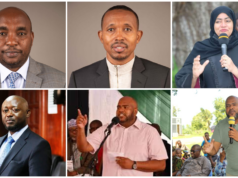
Within ODM, this approach created two visible camps. Leaders such as Gladys Wanga, John Mbadi, and Wycliffe Oparanya pushed Raila’s instruction to cooperate with the government, interpreting it as a tactical engagement meant to secure development benefits and maintain political stability. On the other hand, James Orengo, Otiende Amollo, Edwin Sifuna, and Babu Owino championed Raila’s oppositional narrative, viewing cooperation as a potential dilution of ODM’s ideological identity.
This divergence was not necessarily a sign of disunity but rather an extension of Raila’s deliberate dual messaging, a hallmark of his strategic ambiguity. Through this careful management of multiple audiences, Raila reassured moderates and elites that he was a responsible statesman cooperating for the sake of national cohesion, while simultaneously signalling to his grassroots supporters that he remained skeptical of Ruto’s intentions and had not “sold out.”
Such ambiguity allowed him to preserve political leverage, securing access to state resources, appointments, and visibility without fully surrendering ODM’s independent opposition identity. In this way, Raila continued to wield uncertainty not as a weakness but as a strategic instrument, maintaining his centrality in Kenya’s political calculus even in his absence, and offering ODM a blueprint for survival in an era defined by shifting alliances.
The political payoff of Raila Odinga’s strategic ambiguity was his sustained relevance across both government and opposition spaces. As long as uncertainty surrounded his next move, President Ruto could not ignore him, and no opposition faction could fully replace him. Ruto could not make major political or administrative appointments without considering Raila’s position.
One can trace Raila’s subtle influence in Cabinet appointments, the reshuffling of Principal Secretaries, parastatal placements, and even State House advisory roles, all while his party remained the official opposition, holding key oversight committee chairmanships in both the Senate and the National Assembly.
His enduring centrality was no accident; it was the product of a well-honed strategy that blurred the line between confrontation and cooperation. In essence, Raila’s strategic ambiguity was not confusion but a calculated form of control, an art of remaining indispensable in a political environment where clarity often breeds vulnerability.
ODM must now resist the temptation to commit too early to President Ruto’s broad-based government. History shows that every premature embrace of power has ended in betrayal and loss of identity, from the Moi pact that collapsed overnight to the 2018 Handshake that cost Raila his final presidential bid.
The party stands at a crossroads: either it masters the art of strategic ambiguity that Raila perfected, or it becomes another casualty of political absorption. Caution, patience, and calculated vagueness must guide ODM’s next steps.
To survive, the movement must learn to engage without surrender, negotiate without submission, and cooperate without compromise. Raila’s genius lay not in his alliances but in how he timed, shaped, and leveraged them for maximum advantage. If ODM abandons that discipline and rushes to pledge loyalty to Ruto, it will not just lose relevance; it will bury Raila’s legacy along with its own future.
Alfred Makotsi is a PhD Candidate (Diplomacy and International Relations),
Mandela Washington Fellow (2025)
IGAD Leadership Academy Fellow (2025)
PLGP Fellow (2017)