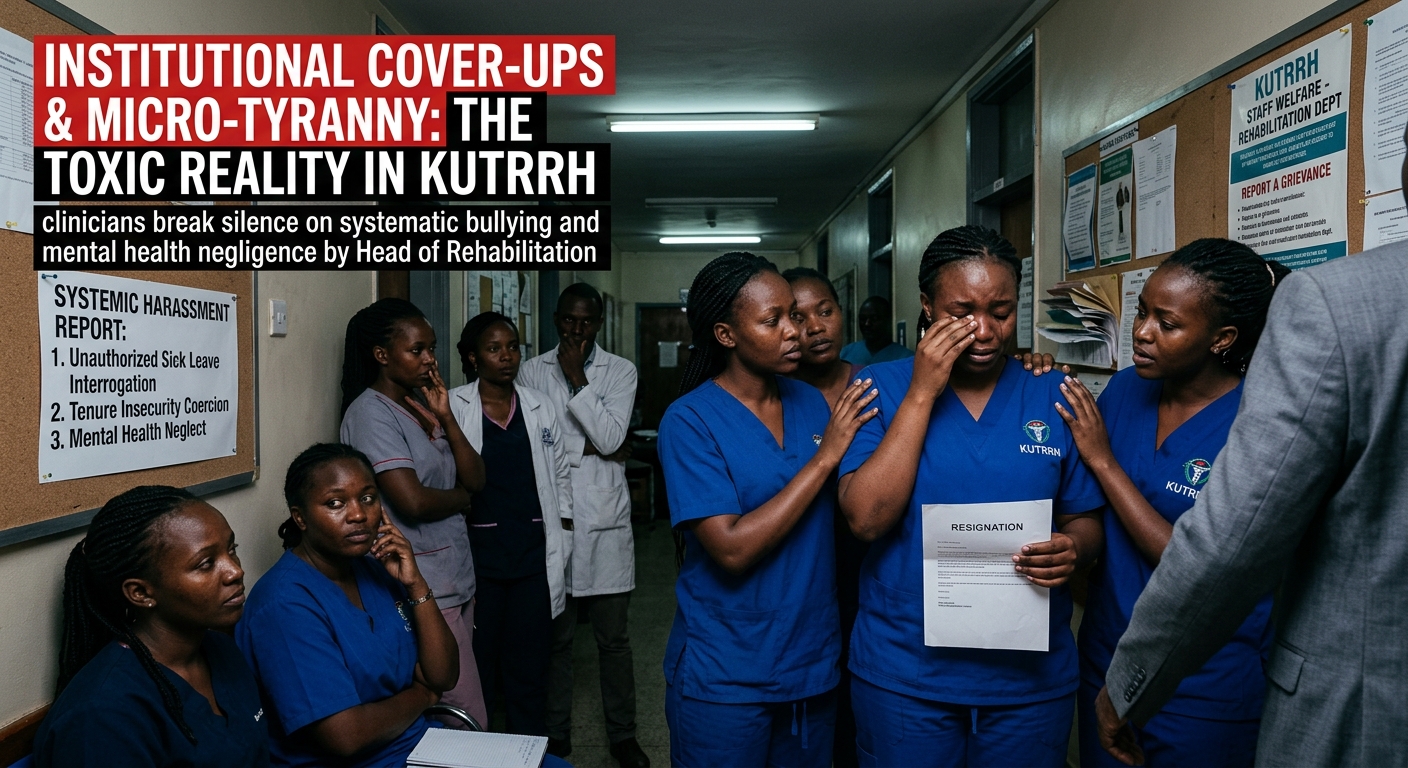
Behind the polished public image of Kenyatta University Teaching, Referral & Research Hospital (KUTRRH), some clinicians describe a very different reality within the Rehabilitation Department, one marked by intimidation, strained working relationships, and a management culture that, they say, leaves employees feeling powerless and unheard.
A growing paper trail, including a formal resignation letter from physiotherapist Terry Jepchirchir Chelimo and a petition submitted to the Commission on Administrative Justice (Office of the Ombudsman), raises serious questions about how staff grievances are handled within the department and by the institution as a whole.
At the centre of the complaints is the Head of Rehabilitation, Ms. Elizabeth Mwikali. According to affected staff, her management style has created an environment in which employees who are perceived as ambitious or outspoken can find themselves singled out. Staff allege that delayed confirmation letters, restrictions on self-funded academic advancement, and limited access to Continuous Professional Development (CPD) opportunities have been used to discourage independence and enforce compliance.
More troubling are allegations concerning how employees are treated when they are unwell. Some clinicians say that even while on legitimate sick leave, they have received calls questioning their medical conditions or the validity of their absence. Others allege that they have been required to compensate for sick days through additional shifts. If substantiated, such practices would raise serious questions about compliance with Kenya’s employment laws, including the protections surrounding sick leave under Section 30 of the Employment Act.
The human cost described by affected staff is particularly concerning. Complaints reportedly include experiences of anxiety, depression, and hospitalisation, suggesting that the conflict is not simply a matter of workplace disagreements but may have had significant consequences for employees’ mental and physical well-being.
The allegations also extend beyond the department itself. Staff claim that internal human-resource complaints have not always remained confidential, with information allegedly reaching the very individuals against whom complaints were made. According to the accounts presented, this has created fear that speaking up could result in further conflict or retaliation.
Chelimo’s experience, as described in her formal complaint, raises broader questions about the effectiveness of KUTRRH’s internal grievance mechanisms. She alleges that when her concerns were escalated, senior administrators, including the Chief Human Resource Officer and the Deputy Director of Clinical Services, focused on de-escalating the situation rather than fully addressing the substance of the allegations. She further describes grievance meetings as rushed or interrupted and says the psychological impact on affected staff was not given sufficient attention.
These are serious allegations, and they deserve an independent and transparent examination rather than dismissal as ordinary workplace disagreements.
A hospital exists to care for people. That mission depends not only on doctors, nurses, therapists, and other clinicians caring for patients, but also on an institutional culture that allows those professionals to work safely, raise concerns, and seek help without fear.
When employees feel that speaking out could jeopardise their careers, professional development, or well-being, the consequences can extend beyond the workplace. Exhausted and distressed healthcare professionals cannot be expected to provide their best care indefinitely.
The questions raised by these complaints therefore go beyond one department or one individual. They concern whether KUTRRH’s systems for protecting employees, handling grievances, maintaining confidentiality, and holding managers accountable are working as they should.
The Commission on Administrative Justice and other appropriate oversight bodies should examine these allegations independently, establish the facts, and ensure that any wrongdoing is addressed. At the same time, all parties named in the complaints should be given a fair opportunity to respond.
Ultimately, the goal should not be to protect an institution’s image at the expense of its employees. It should be to build a workplace where healthcare professionals are treated with dignity, legitimate grievances are taken seriously, and accountability applies to everyone.