The National Assembly is scheduled to resume regular sittings on Tuesday, February 10, 2025, marking the beginning of the Fifth Session of the 13th Parliament following the end of the long recess.
Departmental, Audit, Appropriations and General Purpose Committees resumed last week to begin preparatory work ahead of plenary business.
During the recess, Members of Parliament returned to their constituencies and counties to engage with the electorate and undertake their representative duties.
The break also provided legislators with an opportunity to rest and reconnect with their families before the commencement of what promises to be a demanding session.
A fortnight ago, legislators attended the 2026 legislative retreat for Members of the National Assembly in Naivasha dubbed “Securing Parliamentary Legacy: Delivering the Fifth Session’s Agenda and Preparing for Transition.”
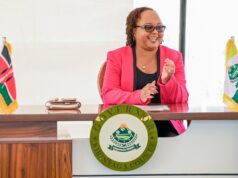
Speaking at the retreat, National Assembly Speaker Moses Wetang’ula reminded MPs of the heavy responsibility ahead.
“This session will be critical in shaping the legacy of the 13th Parliament. Members must remain focused and committed to delivering on the expectations of Kenyans,” he said.
As the House reconvenes, a packed agenda awaits lawmakers, with several key motions and policy documents lined up for consideration.
Top on the priority list is the 2026 Budget Policy Statement (BPS) and the accompanying Debt Management Strategy (DMS), both of which are expected to be submitted to the National Assembly by the National Treasury by February 15, 2025.
Leader of Majority Kimani Ichung’wah described the documents as central to the country’s economic direction.
“The Budget Policy Statement will set the tone for government spending and priorities in the coming financial year. Parliament must scrutinize it thoroughly to ensure it reflects the needs of Kenyans,” he noted.
The BPS is a critical economic blueprint that assesses the state of the economy and outlines the government’s fiscal outlook over the medium term. It sets national priorities, proposed expenditure ceilings for ministries and departments, and recommended transfers to county governments.
The Debt Management Strategy, on the other hand, provides an overview of Kenya’s public debt portfolio, including sources of borrowing, guarantees issued, associated risks, and strategies to ensure debt sustainability.
Once approved by Parliament, the two documents will form the foundation for the Division of Revenue Bill, which determines how revenues raised by the national government are shared between the national and county governments.
Another major item before the House is the consideration of Sessional Paper No. 3 of 2025 on the proposed partial divestiture of the government’s stake in Safaricom PLC.
The policy proposal seeks to sell 15 percent of the government’s shares in the telecommunications giant to Vodacom Group, a move expected to generate approximately $1.57 billion in non-tax revenue.
According to the government, the proceeds from the transaction will be used to finance key infrastructure projects in sectors such as roads, water, and energy.
“This proposal is about unlocking value from public assets to fund development without increasing taxes or debt,” Treasury Principal Secretary Dr. Chris Kiptoo told legislators recently during a public participation exersice.
The divestiture would reduce the government’s ownership in Safaricom from 35 percent to 20 percent and is aimed at stimulating economic growth and strengthening local capital markets without resorting to additional borrowing or taxation.
Public participation on the proposal has already been conducted by the relevant parliamentary committees.
The House is also expected to consider legislative proposals on the establishment of a National Infrastructure Fund and a Sovereign Wealth Fund.
“These funds are intended to provide innovative financing solutions for Kenya’s long-term development agenda,” National Assembly Finance Committee Chair Kuria Kimani said. “They will help reduce pressure on the Exchequer while attracting private sector investment.”
The funds are designed to mobilize private sector capital, reduce reliance on public debt, and unlock long-term financing for strategic national projects.
Key focus areas for the proposed funds include food security through large-scale irrigation projects, expansion of transport and logistics infrastructure including the dualling of 2,500 kilometers of highways and extension of the Standard Gauge Railway and energy generation.
The government aims to add at least 10,000 megawatts to the national grid through investments in geothermal, hydro, solar, wind, and nuclear power.
In the energy sector, Parliament will also deliberate on the Field Development Plan and Production Sharing Contracts between the Government of Kenya and Gulf Energy relating to oil exploration Blocks T6 and T7 in the South Lokichar Basin, Turkana County.
“These agreements are important for Kenya’s energy security and economic future,” Energy Cabinet Secretary Opiyo Wandayi said. “Parliamentary approval will pave the way for responsible exploitation of our natural resources.”
The agreements, which have already been tabled in both the National Assembly and Senate, require parliamentary ratification as provided by law.
The proposed extraction of oil resources is expected to reduce Kenya’s dependence on imported fuel and potentially lower energy costs in the long run.
Public participation on the matter is ongoing to ensure that national interests are safeguarded.
Additionally, the House will consider several procedural motions, including the reconstitution of key House-keeping committees whose terms expire at the end of each session.
“These committees are essential to the smooth running of parliamentary business, and their timely reconstitution is a routine but important exercise,” Clerk of the National Assembly Samuel Njoroge stated.
The committees include the House Business Committee, the Committee on Members’ Services and Facilities, and the Committee on Powers and Privileges. Another motion will seek to accommodate six newly elected Members of Parliament into various committees.
Lawmakers are further expected to examine reports from several parliamentary committees.
Among them is the Public Accounts Committee report on the Auditor-General’s findings on financial statements of national government ministries and agencies for the 2022/2023 financial year, which will have implications on the Division of Revenue Bill.
Against this backdrop, National Assembly Speaker Rt. Hon. (Dr.) Moses Masika Wetang’ula has cautioned lawmakers against actions that could undermine timely resource allocation to counties, warning that delays often arise from lapses in parliamentary oversight processes.
“I would like to urge Parliament to ensure that we are not the ones who contribute to reduced or delayed allocation of resources to counties due to the failure by the Public Accounts Committee (PAC) to examine current accounts in good time,” Speaker Wetang’ula said.
He noted that the BPS which sets expenditure ceilings for ministries, departments and agencies is scheduled to be presented to the House by February 15, 2026.
“I therefore encourage the PAC to expedite and conclude its examination of the Auditor-General’s latest report before the BPS is considered by this House,” he added.
The Speaker was speaking during the Naivasha retreat.
Other reports lined up for debate include the Committee on Delegated Legislation’s recommendation to annul the Privileges and Immunities (Global Centre for Adaptation) Order, 2025; the Agriculture Committee’s inquiry into disparities in tea pricing across different regions; and the Defence Committee’s investigation into allegations of human rights violations and environmental degradation linked to the British Army Training Unit in Kenya (BATUK).
“As representatives of the people, we have a duty to interrogate these reports objectively and ensure accountability in all sectors,” Deputy Minority Leader and Kathiani MP Hon. Robert Mbui said.