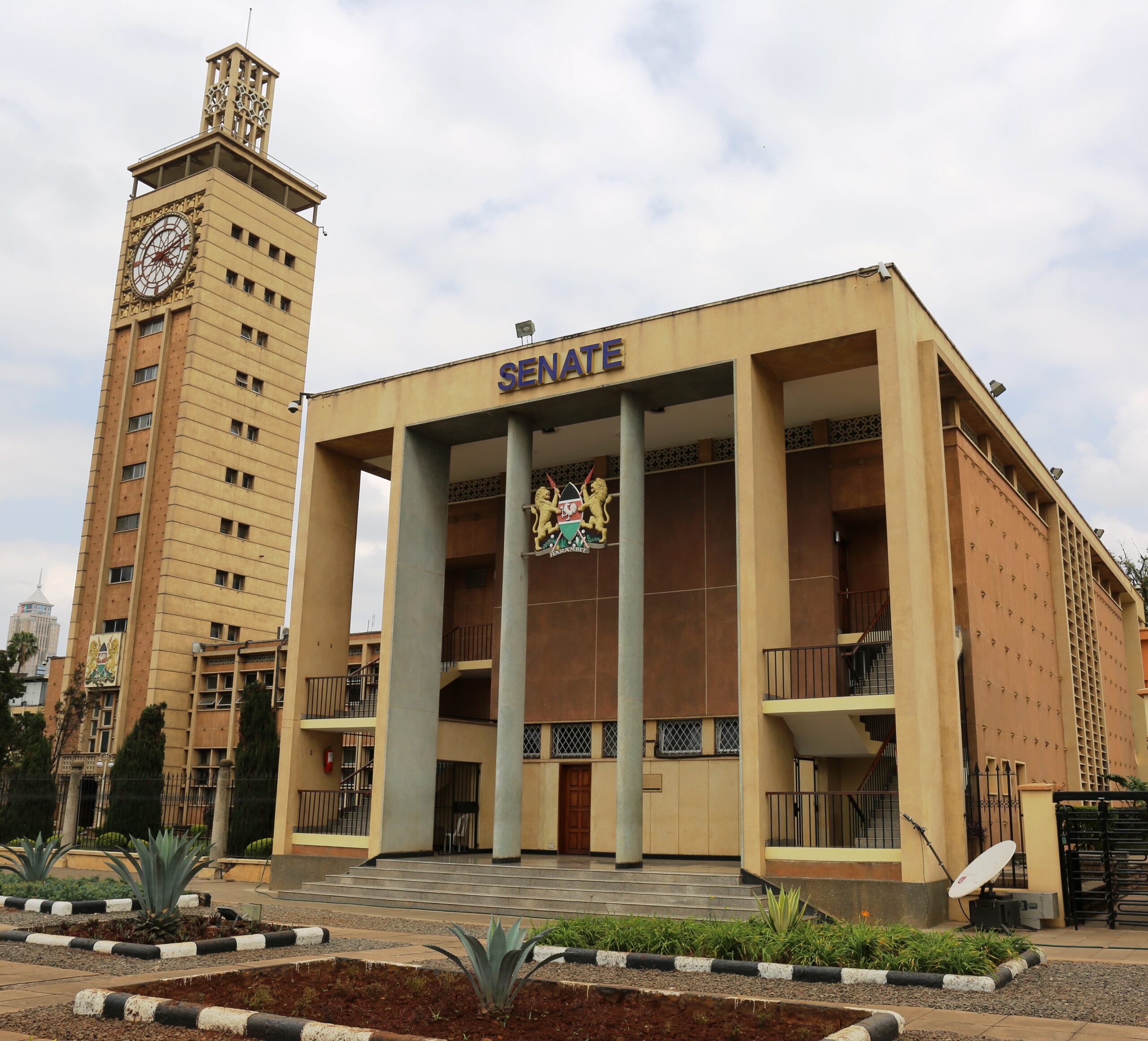
Members of Parliament have approved a mediated version of the Food and Feed Safety Control Coordination Bill, 2023, paving the way for a comprehensive legal framework aimed at regulating animal feed quality and safeguarding public health.
The approval follows the adoption of a report by a joint mediation committee that resolved disagreements between the National Assembly and the Senate over the proposed law.
The committee was co-chaired by nominated MP Hon. Sabina Chege and Bungoma Senator David Wakoli.
Leader of Majority Party Hon. Kimani Ichung’wah who moved the motion in the House, hailed the breakthrough as a critical step in addressing longstanding gaps in the regulation of animal feeds, warning that poor-quality inputs pose a direct threat to human health.
“This Bill is not just about agriculture; it is equally about public health,” Ichung’wah said. “What we feed our animals ultimately determines the safety of the food consumed by Kenyans. If we get it wrong at the feed level, we compromise the entire food chain.”
The Kikuyu MP pointed to growing concerns over high levels of aflatoxin in animal feeds, particularly those consumed by poultry, pigs and cattle, noting that the absence of a clear legal framework had allowed substandard products to flood the market.
“There has been a proliferation of animal feed products from both local and imported sources, yet we lacked proper mechanisms to assure their quality,” he said. “This law will ensure feeds are not only available and affordable but also safe and nutritionally adequate.”
Hon. Ichung’wah, himself a farmer, decried the widespread practice by some manufacturers of producing low-quality feeds by simply milling maize germ and mixing it with minimal additives, often without essential mineral enrichment.
“Farmers are spending money on feeds that do not yield results,” he said. “You cannot expect animals to gain weight or produce quality milk if they are fed substandard products. As we say, ‘garbage in, garbage out.’ The same applies in livestock production.”
He added that the Bill would introduce stricter inspection and certification standards to guarantee that animal feeds meet required nutritional thresholds, thereby improving productivity in the livestock sector.
The legislation also seeks to clarify the roles of national and county governments in regulating the sector, an issue that had initially caused friction between the two Houses.
Ichung’wah said the mediated version strikes a balance by clearly outlining county functions under Section 16 of the proposed law, while preserving national oversight to ensure consistency and international recognition of standards.
“We cannot reduce the regulation of such a critical sector to fragmented county-level systems that may not meet global benchmarks,” he said. “We need certifications that are recognised both nationally and internationally, especially as we expand exports and engage in cross-border trade.”
He noted that the rapid expansion of feed manufacturing plants in areas such as Thika, along Garissa Road, Naivasha, Narok and Kajiado underscores the urgency of a robust regulatory framework.
Lawmakers also recalled the intense debate during the Bill’s Second Reading on whether it fell under agriculture or health, ultimately agreeing that its cross-cutting nature required input from both sectors.
Ichung’wah expressed confidence that professionals in animal production and public health would continue to refine the law during subsequent legislative stages to ensure it delivers maximum benefit.
“This is a foundational piece of legislation,” he said. “If implemented effectively, it will not only protect consumers but also boost farmer productivity and restore confidence in the livestock value chain.”