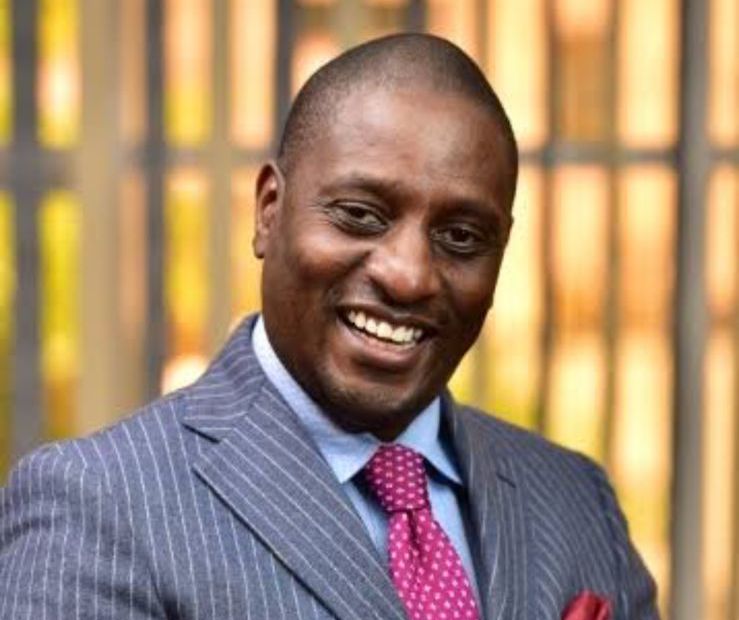
High Court Advocate Charles Munga Kaguoya has drawn a firm legal line against what he describes as a calculated and coordinated campaign to besmirch his reputation, warning that individuals propagating what he considers defamatory and unsubstantiated allegations could face legal consequences.
Munga, who practises under Munga Kibanga & Co. Advocates, has mounted a robust defence of his professional integrity while cautioning media practitioners, bloggers and members of the public against transforming an ongoing legal dispute into a public spectacle or a substitute for judicial determination.
The dispute stems from a demand notice dated July 31, 2026, issued by Mogire Hezron & Co. Advocates on Munga’s behalf. The notice accuses Peter Gathungu Gikonyo of allegedly making defamatory utterances against the advocate on July 23, 2026, along Koinange Street in Nairobi.
According to the demand notice, Gikonyo allegedly accused Munga of corruption, bribery and unlawfully withholding land title deeds. Munga disputes the allegations and maintains that they constitute a serious affront to his professional reputation and standing.
The matter subsequently spilled into the public domain following demonstrations allegedly organised outside the offices of the Law Society of Kenya. Munga’s legal representatives allege that Gikonyo financed and organised the demonstrations, during which protesters reportedly displayed placards describing the advocate as a “criminal and swindler.”
The demonstrations attracted media coverage, including reports published by Citizen Digital, before the allegations were further amplified across social media platforms.
Munga’s legal team subsequently issued a three-day ultimatum demanding that Gikonyo admit liability, retract the alleged defamatory statements and issue a public apology.
The advocates warned that failure to comply would precipitate legal proceedings seeking general damages and such other remedies as may be available under the law.
In a subsequent press statement, Munga escalated his warning, condemning what he described as an attempt to subject him to “trial by media” through the dissemination of allegations that remain contested and have not been conclusively determined by a court of law.
The advocate invoked the sub judice principle, noting that disputes between the parties are already before the courts and warning that unrestrained public commentary could potentially prejudice or interfere with ongoing judicial proceedings.
Munga maintained that serious allegations must be subjected to evidentiary scrutiny and determined through due process rather than through public demonstrations, sensational reporting or social-media campaigns.
He further disclosed that statements concerning the matter had been recorded with the police, with additional investigations and possible criminal charges against Gikonyo expected, subject to the outcome of the relevant investigative and prosecutorial processes.
The advocate also issued a stern caution to media houses, bloggers and digital publishers, urging them to uphold professional and ethical standards when reporting allegations capable of causing reputational harm.
He called for rigorous verification of claims and a clear distinction between allegations, speculation and established facts, warning against the indiscriminate amplification of claims merely because they are sensational or capable of attracting public attention.
Munga argued that unverified accusations disseminated through traditional and digital media can effectively create a parallel justice system in which individuals are condemned in the court of public opinion before evidence is tested and before a competent court has rendered its determination.
“The truth does not require a trial by media. It requires evidence, due process and a competent judicial determination,” Munga stated.
He reaffirmed his confidence in the judicial process and indicated that he would pursue all lawful avenues necessary to protect his professional reputation and vindicate his position.
The dispute has brought into sharp focus the delicate balance between freedom of expression, responsible journalism, protection of reputation and the sanctity of judicial proceedings.
As the legal and investigative processes unfold, the competing allegations remain subject to due process and judicial determination. Munga, however, has made his position unequivocal: he intends to confront what he regards as a defamatory campaign through the established instruments of law rather than through the court of public opinion.